Research Article | | Peer-Reviewed

Prevalence of Metabolic Syndrome Among Obese Children in Cote d’Ivoire

Received: 31 July 2026     Accepted: 14 August 2026     Published: 8 September 2026
Views:       Downloads:
Abstract

Objective: This study aimed to assess the prevalence of metabolic syndrome among school-aged children in three municipalities of Abidjan, Côte d’Ivoire, and to analyze its anthropometric and biological determinants. Methods: A cross-sectional survey was conducted among 1,251 children aged 5 to 15 years. Among them, 64 children (31 obese and 33 normal-weight) underwent biological testing. Anthropometric measurements (BMI, waist circumference, abdominal circumference), blood pressure, and biochemical parameters (blood glucose, triglycerides, HDL cholesterol) were collected. The diagnosis of metabolic syndrome was based on the NCEP ATP III criteria. Statistical analyses were performed using SPSS 20, employing Student’s t-test, the chi-square test, and Pearson’s correlation coefficients. Results: Obese children had significantly higher values for weight, BMI, waist circumference, and blood pressure compared to the control group (p < 0.05). The prevalence of metabolic syndrome was 25%, with a higher frequency among girls (20.3%) than among boys (4.7%). Abdominal obesity, hypertension, and low HDL cholesterol were the most common abnormalities. A positive correlation was observed between BMI and waist circumference (r = 0.788, p = 0.001), as well as between waist circumference and systolic blood pressure (r = 0.493, p = 0.004). Hyperuricemia was strongly associated with metabolic syndrome, suggesting its potential role as an early biomarker of cardiovascular risk. Conclusion: This study highlights a concerning prevalence of metabolic syndrome among obese children in Ivorian schools, particularly among girls. Abdominal obesity and hyperuricemia appear to be key factors in the development of cardiometabolic complications. These results underscore the urgent need for targeted prevention strategies, including early screening, the promotion of a balanced diet, and physical activity, in order to reduce the future burden of cardiovascular disease in Côte d’Ivoire.

Published in Journal of Food and Nutrition Sciences (Volume 14, Issue 5)
DOI 10.11648/j.jfns.20261405.11
Page(s) 271-280
Creative Commons

This is an Open Access article, distributed under the terms of the Creative Commons Attribution 4.0 International License (http://creativecommons.org/licenses/by/4.0/), which permits unrestricted use, distribution and reproduction in any medium or format, provided the original work is properly cited.

Copyright

Copyright © The Author(s), 2026. Published by Science Publishing Group

Keywords

Prevalence, Metabolic Syndrome, Children, Obesity

1. Introduction
Over the past few decades, developing countries have undergone profound socioeconomic change, characterized by rapid urbanization and a radical transformation in lifestyles . This transition has been accompanied by a shift in the epidemiological profile: chronic noncommunicable diseases are gradually replacing infectious diseases as the leading cause of morbidity. As early as the 1970s, this trend was conceptualized under the term “epidemiological transition” . In practical terms, it manifests as the adoption of a high-calorie diet rich in fats, sugars, and salt, combined with a drastic reduction in physical activity, thereby creating an environment conducive to the rise of obesity and cardiometabolic risk factors .
Today, developing countries have high prevalence rates of obesity , high blood pressure, diabetes, and dyslipidemias, particularly hypercholesterolemia . According to the World Health Organization, nearly 80% of deaths attributable to chronic diseases occur in low- and middle-income countries, where the incidence of these conditions is rising at an alarming rate . This phenomenon, which was initially concentrated in urban areas , is now increasingly spreading to pediatric and adolescent populations .
Lipid metabolism disorders, among the most common inherited conditions in pediatrics, are a major determinant of long-term cardiovascular health. The epidemic of obesity and overweight among school-age children and adolescents has now emerged as a major public health issue . Furthermore, cardiovascular diseases remain one of the leading causes of mortality worldwide, closely linked to the rise in risk factors such as obesity, insulin resistance, dyslipidemia, and hypertension . The frequent co-occurrence of these conditions in the same individual has led to the emergence of the concept of metabolic syndrome, now recognized as a marker of high cardiovascular risk .
By its very nature, this syndrome represents a clinical and pathophysiological interface between obesity, diabetes, and cardiovascular disease. Its steadily increasing prevalence makes it a major public health problem, both in terms of frequency and severity . In the general pediatric population, its prevalence ranges from 7.2% to 15.2%; it can reach 38.7% among moderately obese adolescents and climb as high as 49.7% among those with severe obesity .
In this context, this study aims to assess the prevalence of metabolic syndrome among a group of children living in three municipalities of the city of Abidjan, in Côte d'Ivoire. The objective is to provide insights into the extent of this phenomenon and its implications for the future health of the Ivorian population.
2. Materials and Methods
2.1. Materials
This study was conducted in six schools—three public and three private—in three municipalities of the city of Abidjan, Côte d’Ivoire.
Children aged 5 to 15 years at the time of the survey were included in this study. Any child for whom parental/guardian consent was not provided, any child absent during the survey period, and any child present but suffering from a chronic or acute illness was excluded from the study. At the conclusion of the survey, 1,251 children were recorded across all the schools visited.
Biological analyses were conducted on 64 children, including 31 obese children and 33 children of normal weight, who served as the control group. The parents of these 64 children were contacted again to obtain their consent prior to blood collection.
The technical equipment consisted of survey materials, blood collection supplies, and materials for blood storage and analysis.
2.2. Methods
Anthropometric measurements included body weight, height, waist circumference, and body mass index.
Weight and height were measured according to World Health Organization standards . Weight (in kg) was measured with participants barefoot and wearing light clothing using a Sohenle electronic scale with an accuracy of 0.5 kg. Height (in meters) was measured using a height rod with an accuracy of 0.1 cm. Participants stood barefoot with their feet together and flat on the floor, their backs, buttocks, and heels pressed against the vertical board of the height rod, and their heads held in a horizontal position so that their line of sight was perpendicular to their bodies. Waist circumference was measured using a flexible tape measure. To measure waist circumference, the child stands upright, and the tape is wrapped around the abdomen just above the navel after exhaling normally. When taking this measurement, make sure the tape measure is neither too loose nor too tight, that it lies flat against the waist, and, most importantly, that the measurement is taken horizontally, especially around the back.
Children with a waist circumference (WC) above the 90th percentile are classified as having abdominal obesity according to French guidelines .
Body Mass Index (BMI) in kg/m2 was calculated by dividing weight in kilograms by height squared in square meters. BMI is the measure used to classify children according to their nutritional status.
Blood pressure was measured using a mercury sphygmomanometer equipped with a cuff suitable for children, after 5 minutes of rest in the supine position. Children were considered hypertensive if their blood pressure exceeded the 95th percentile for their height, sex, and age .
2.2.1. Collection of Blood Samples From the Children Studied
Based on the information obtained from the survey, 64 children were selected for biological testing. Of these 64 children, 31 were obese and 33 were of normal weight (controls). For each child, a fasting venous blood sample (taken 12 hours after the last meal) was collected from the antecubital fossa in the morning. The blood, collected in 5-ml Vacutainer tubes (with red and purple caps), was immediately transported to the medical testing laboratory of the Biochemistry Department at the Treichville University Hospital Center (CHU) (Abidjan, Ivory Coast). Once at the laboratory, the blood samples collected in the red-capped tubes were centrifuged at 3,000 rpm for 5 minutes to obtain serum. The resulting serum aliquots were stored by freezing (-20 °C) in sealed microtubes until analysis. Every precaution was taken to ensure that all procedures were performed away from sunlight to prevent the alteration of certain biochemical parameters. The following parameters were determined: HDL cholesterol, LDL cholesterol, total cholesterol, plasma triglycerides, uric acid, and fasting blood glucose.
2.2.2. Diagnosis of Metabolic Syndrome
In this study, the definition used is that of the NCEP ATP III (National Cholesterol Education Program Adult Treatment Panel III), according to which at least three of the following five criteria must be met to diagnose metabolic syndrome:
1) Abdominal obesity: A waist circumference (WC) above the 90th percentile, according to French guidelines .
2) Low HDL cholesterol: HDL cholesterol below the 10th percentile, or 1.03 mmol/L, using the 10th percentile mean according to the National Cholesterol Education Program (NCEP) Report of the Expert Panel on Blood Cholesterol Levels in Children and Adolescents .
3) Hypertriglyceridemia: plasma triglycerides above the 90th percentile, i.e., >1.24 mmol/L (corresponding to the age-adjusted 90th percentile mean) .
4) Hypertension: systolic blood pressure (SBP) > 95th percentile or diastolic blood pressure (DBP) > 95th percentile .
5) Impaired glucose tolerance: fasting blood glucose > 6.1 mmol/L (1.09 g/L) .
For the diagnosis of metabolic syndrome in children, if three of the five criteria are present, metabolic syndrome is confirmed.
2.2.3. Statistical Analyses
The data were entered using a double-entry procedure into a Microsoft Excel spreadsheet, then verified and cleaned using EpiInfo version 3.2.5 to eliminate discrepancies. Statistical analysis was performed using SPSS version 20.0. Quantitative variables were described by their mean accompanied by the standard deviation (SD) or the 95% confidence interval (95% CI), depending on the suitability of the data distribution. Qualitative variables were expressed as proportions (numbers and percentages). Age was converted to decimal years using the Ireton method . Comparisons of means between two independent groups were performed using Student’s t-test. Comparisons of proportions were performed using Pearson’s χ2 test. The significance level was set at p < 0.05 for all tests. Correlations between the various parameters constituting metabolic syndrome were estimated using Pearson’s linear correlation coefficient (r). Graphs were generated using Microsoft Excel.
3. Results
3.1. Distribution of Children by Sex and Nutritional Status
The study population consisted of 64 children, including 33 children of normal weight and 31 obese children. The mean age is 9.50 ± 1.91 years, ranging from 5 to 15 years. The mean weight is 37.76 ± 12.76 kg. Table 1 presents the main anthropometric characteristics, blood pressure, and blood glucose levels of normal-weight and obese children. Weight, BMI, waist circumference, and abdominal circumference, as well as blood pressure, were significantly higher in obese children compared to normal-weight children (p < 0.05). Regarding blood glucose levels, there was no significant difference between normal-weight and obese children (p > 0.05).
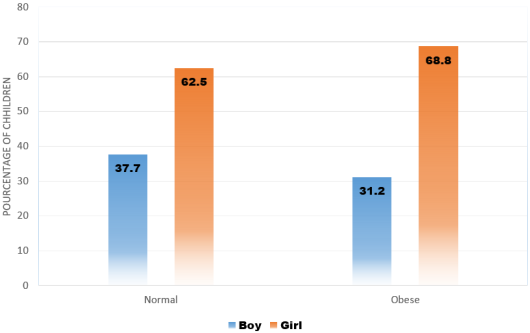
Figure 1 provides information on the nutritional status of children by sex. Among normal-weight children, 37.7% are boys and 62.5% are girls. Among obese children, 31.2% are boys and 68.8% are girls.
Table 1. Anthropometric and biological characteristics and blood pressure in normal-weight and obese children.

Normal weight n = 33

Obese n = 31

P

Age (years)

9,19 ± 1,85

9,79 ± 1,94

0,201

Weight (kg)

29,13 ± 6,56

45,87 ± 11,85

0,012

Height (m)

1,34 ± 0,11

1,43 ± 0,11

0,081

BMI (kg/m2)

16,37 ± 1,7

22,25 ± 3,15

0,012

Waist Circumference (cm)

62,55 ± 5,26

73,66 ± 7,94

0,005

Abdominal Circumference (cm)

60,54 ± 3,88

74,27 ± 8,7

0.004

Systolic Blood Pressure (mm Hg)

10,83 ± 8,4

11,98 ± 8,36

0,006

Diastolic Blood Pressure (mm Hg)

6,14 ± 4,2

7,62 ± 16,30

0,012

Blood Glucose (g/L)

0,72 ± 0,12

0,80 ±-0,19

0,081

Results are expressed as mean ± standard deviation. BMI: Body Mass Index; Systolic BP: Systolic Blood Pressure; Diastolic BP: Diastolic Blood Pressure; P: significance threshold
Figure 1. Nutritional status of children by sex.
With regard to blood glucose levels, 9.4% of obese children and 6.2% of normal-weight children have high blood glucose levels; 18.8% of normal-weight children and 12.5% of obese children have low blood glucose levels; and 75% of normal-weight children and 78.1% of obese children have normal blood glucose levels. No significant difference was observed between normal-weight children and obese children (p = 0.895).
3.2. Anthropometric and Biological Characteristics of Obese Children by Sex
The criteria for metabolic syndrome were assessed in the 31 obese children. This population of obese children consisted of 58.07% girls and 41.93% boys, with a mean age of 9.84 ± 1.93 years. By gender, the mean age was 10.12 ± 2.39 years for girls and 9.33 ± 1.29 years for boys. The mean BMI was 23.47 ± 2.76 kg/m2 for girls and 20.55 ± 2.93 kg/m2 for boys. The average weight is 49.34 ± 11.6 kg for girls and 41.14 ± 10.89 kg for boys. The average height is 1.44 ± 0.1 m for girls and 1.40 ± 0.11 m for boys. BMI, waist circumference, and abdominal circumference are 23.44 ± 3 kg/m2, 75.41 ± 7.7 cm, and 82.35 ± 16.9 cm for girls, and 20.60 ± 2.76 kg/m2, 71.73 ± 8.31 cm, and 68.47 ± 14.06 cm for boys. Blood pressure was 12.10 ± 7.7 mmHg for systolic pressure and 8.23 ± 16.9 mmHg for diastolic pressure in girls. In boys, it was 11.77 ± 9.73 mmHg for systolic pressure and 6.82 ± 14.64 mmHg for diastolic pressure. As for blood glucose, triglycerides, total cholesterol, HDL cholesterol, LDL cholesterol, and uric acid levels, they are 0.82 ± 0.14 g/L, 1.26 ± 0.32 g/L, 2.11 ± 0.25 g/L, 0.44 ± 0.1 g/L, 1.48 ± 0.33 g/L, and 63.45 ± 13.7 mg/L in girls, and 0.86 ± 0.23 g/L, 1.34 ± 0.88 g/L, 2.17 ± 0.27 g/L, 0.47 ± 0.11 g/L, 1.55 ± 0.32 g/L, and 48.02 ± 15.35 mg/L for boys (Table 2).
3.3. Prevalence of Metabolic Syndrome Criteria in Obese Children
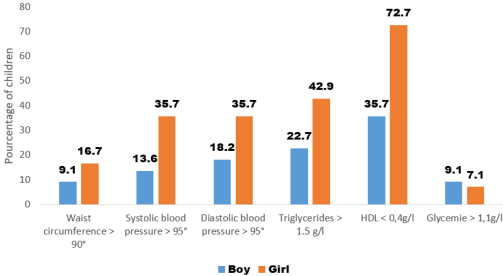
Figure 2 shows the prevalence of metabolic syndrome criteria in obese children. Abdominal obesity is observed in 16.7% of girls and 9.1% of boys. The prevalence of hypertension among obese children is twice as high in girls as in boys (35.7% vs. 13.6%). As for triglyceride levels, they are higher in girls (42.9%) than in boys (22.7%). Low HDL-cholesterol levels were observed in 72.7% of girls and 35.7% of boys, respectively. All of these values showed a significant difference between girls and boys (p < 0.05). Elevated blood glucose levels were observed in 7.1% of girls compared with 9.1% of boys, with no significant difference.
Table 2. Anthropometric and Biological Characteristics in Obese Children by Sex.

Obese girl n = 17

Obese boy n =14

P

Age (years)

10,12 ± 2,39

9,33 ± 1,29

0,215

Weight (kg)

49,34 ± 11,6

41,14 ± 10,89

0,008

Height (m)

1,44 ± 0,1

1,40 ± 0,11

0,051

BMI (kg/m2)

23,44 ± 3

20,60 ± 2,76

0,004

Waist Circumference (cm)

75,41 ± 7,7

71,73 ± 8,31

0,361

Abdominal Circumference (cm)

82,35 ± 16,9

68,47 ± 14,06

0,001

Systolic Blood Pressure (mm Hg)

12,10 ± 7,7

11,77 ± 9,73

0,038

Diastolic Blood Pressure (mm Hg)

8,23 ± 16,9

6,82 ± 14,64

0,001

Blood Glucose (g/L)

0,82 ± 0,14

0,86 ± 0,23

0,565

Triglycerides (g/l)

1,26 ± 0,32

1,34 ± 0,88

0,061

Total Cholesterol (g/L)

2,11 ± 0,25

2,17 ± 0,27

0,251

HDL cholesterol (g/l)

0,44 ± 0,1

0,47 ± 0,11

0,381

LDL Cholesterol (g/l)

1,48 ± 0,33

1,55 ± 0,32

0,061

Uric Acid (mg/L)

63,45 ± 13,7

48,02 ± 15,35

0,001

Results are expressed as mean ± standard deviation; BMI: Body Mass Index; Systolic BP: Systolic Blood Pressure; Diastolic BP: Diastolic Blood Pressure; P: significance threshold
Figure 2. Metabolic syndrome parameters observed in obese boys and girls.
3.4. Prevalence of Metabolic Syndrome in Obese Children
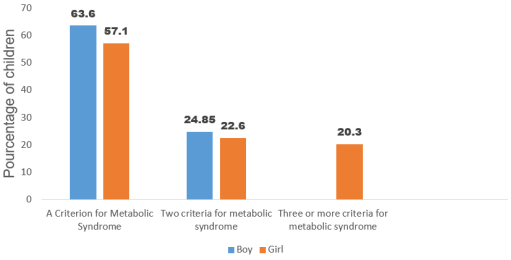
Figure 3 shows the prevalence of metabolic syndrome in obese girls and boys. Metabolic syndrome was observed in 20.3 per cent of obese girls, compared with 4.7 per cent of obese boys in the study. Two criteria for metabolic syndrome are observed in 22.6 per cent of girls and 24.85 per cent of boys. The proportions of girls and boys meeting one criterion for metabolic syndrome are 57.1 per cent and 63.6 per cent, respectively. Overall, metabolic syndrome is more prevalent among girls than among boys (p < 0.05).
3.5. Correlation Between Metabolic Syndrome Criteria
Table 3 shows the correlation between BMI and waist circumference, between BMI and low HDL, between waist circumference and systolic blood pressure, between waist circumference and low HDL, and between triglycerides and low HDL. There is a statistically significant positive correlation between BMI and waist circumference (r = 0.788, p = 0.001) and between waist circumference and systolic blood pressure (r = 0.493, p = 0.004). Weight gain promotes the development of high blood pressure and abdominal obesity. The correlations between BMI, waist circumference and triglycerides with low HDL are inversely proportional. BMI and low HDL (r = -0.307, p = 0.008), waist circumference and low HDL (r = -0.156, p = 0.394), and triglycerides and low HDL (r = -0.168, P = 0.006).
3.6. Comparison of Metabolic Syndrome Parameters Between Obese and Normal-weight Children
This study compares waist circumference, blood pressure and blood glucose levels between normal-weight and obese children. Table IV shows that 28.1 per cent of obese children have abdominal obesity, whilst none of the normal-weight children have abdominal obesity (p = 0.0001). For systolic blood pressure, amongst children with readings above the 95th percentile, 53.1 per cent are obese and 3.1 per cent are of normal weight. For diastolic blood pressure, 53.1 per cent of obese children have diastolic blood pressure readings above the 95th percentile and 6.2 per cent of normal-weight children have a reading above the 95th percentile (p = 0.001). Hyperglycaemia is observed in 6.2 per cent of normal-weight children and 9.4 per cent of obese children (p = 0.894) (this sentence needs reviewing; I think the opposite is correct, i.e. 9.4 per cent of normal-weight children and 6.2 per cent of obese children). With the exception of blood glucose levels, the other parameters of metabolic syndrome were significantly higher in obese children than in normal-weight children (p > 0.05).
Figure 3. Prevalence of metabolic syndrome among obese boys and girls.
p < 0,05
Table 3. Correlation between the criteria for metabolic syndrome.

Waist circumference

BMI

Systolic blood pressure

Low HDL

Triglyceride

Waist circumference

r =

1,00

0,788

0,493

-0,156

0,230

P =

0,0001

0,004

0,394

0,206

BMI

r =

0,788

1,00

0,705

-0,307

0,321

P =

0,0001

0,0001

0,088

0,074

Systolic blood pressure

r =

0,493

0,705

1,00

-0,389

0,148

P =

0,004

0,0001

0,028

0,419

Low HDL

r =

-0,156

-0,307

-0,389

1,00

-0,168

P =

0,394

0,088

0,028

0,357

Triglyceride

r =

0,230

0,321

0,148

-0,168

1,00

P =

0,206

0,74

0,419

0,357

r = correlation coefficient; p = two-tailed significance.
Table 4. Comparison of metabolic syndrome parameters in normal-weight and obese children.

Normal (%)% n = 33

Obese (%)% n = 31

P

Waist circumference > 90

0

28,1 (9)

0,001

Waist circumference < 90

100 (31)

71,9 (23)

Systolic blood pressure > 95

3,1 (1)

53,1 (17)

0,001

Systolic blood pressure < 95

96,9 (30)

46,9 (14)

Diastolic blood pressure > 95

6,2 (2)

53,1 (17)

0,001

Diastolic blood pressure < 95

93,7 (29)

46,9 (14)

Blood glucose > 1.10 g/l

6,2 (2)

9,4 (3)

0,291

Blood glucose < 1.10 g/l

93,7 (29)

90,6 (28)

3.7. Hyperuricaemia, Obesity and Metabolic Syndrome in Children
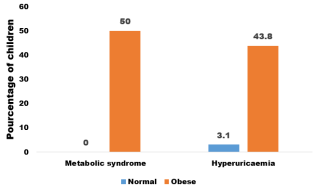
Figure 4 provides information on the relationship between hyperuricaemia, obesity and metabolic syndrome. 43.8 per cent and 50 per cent of obese children have hyperuricaemia and meet the criteria for metabolic syndrome, respectively, compared with 3.1 per cent and 0 per cent of normal-weight children. No normal-weight children met the criteria for metabolic syndrome. These figures differ significantly between normal-weight and obese children. Hyperuricaemia may predict the onset of metabolic syndrome in obese children.
Figure 4. Comparison of metabolic syndrome and hyperuricaemia in normal-weight and obese children.
4. Discussion
This study highlights a close and consistent relationship between body mass index (BMI) and waist circumference, consistent with findings reported in the international literature . Our results reveal a statistically significant difference between BMI and levels of systolic blood pressure (SBP) and diastolic blood pressure (DBP). Furthermore, highly significant positive correlations were found between waist circumference and systolic hypertension, between waist circumference and BMI, and between BMI and systolic hypertension. Conversely, negative correlations were identified between systolic hypertension and low HDL, between triglycerides and low HDL, between BMI and low HDL, and between waist circumference and low HDL. The association between obesity and hypertension in children, which is well documented in industrialized countries , is thus reflected in our cohort.
Our study reveals a risk of developing hypertension—both systolic and diastolic—among obese girls. These findings are consistent with those reported by Samuel et al. in Mexico, although they differ from an Algerian study conducted among obese adolescents, in which the prevalence of hypertension was twice as high among boys as among girls .
These discrepancies underscore the importance of ethnic, geographic, and methodological factors in Assessment of blood pressure profiles in obese children. With regard to carbohydrate metabolism, the children in our cohort appear to be relatively unaffected by hyperglycemia. This observation is consistent with the findings of Bougnère et al. , who reported a prevalence of hyperglycemia of only 10 to 15% among obese children. Type 2 diabetes, meanwhile, remains rare at this stage of development. It is recognized that only children with a strong genetic predisposition—particularly those of Asian descent and, to a lesser extent, those of African descent—may develop this condition in the context of obesity. Among children of European or North African descent, obesity is generally not associated with diabetes before adulthood . In our population, only 6.2% of normal-weight children and 9.4% of obese children had elevated fasting blood glucose levels. This low prevalence of hyperglycemia in children is comparable to that reported by Druet et al. in European studies on glucose tolerance and type 2 diabetes in children and adolescents.
After low HDL cholesterol, the highest prevalences among obese children were for hypertriglyceridemia and hypertension, while the lowest prevalences were for waist circumference and hyperglycemia. Metabolic syndrome (MS) was identified in 25% of the children in our sample.
This prevalence is comparable to that reported in Turkey (27.2%) , but remains lower than the rates observed among American or Indian adolescents, where MS reaches 36% . These disparities should be interpreted with caution, given the heterogeneity of pediatric definitions of metabolic syndrome and differences in socioeconomic contexts among populations .
A key finding of our study is the increase in the prevalence of metabolic syndrome with rising BMI, a relationship that is even more pronounced among obese children with hyperuricemia. These results corroborate the findings of Gao et al., who demonstrated that hyperuricemia is an independent risk factor for the components of metabolic syndrome . Uric acid may also predispose individuals to obesity, metabolic syndrome, type 2 diabetes, hypertension, and cardiovascular disease . From a pathophysiological perspective, uric acid directly stimulates the renin-angiotensin system and induces renal vasoconstriction, thereby contributing to elevated blood pressure . Weight loss has a beneficial effect in obese individuals with hyperuricemia, particularly regarding associated comorbidities, an effect comparable to that observed after bariatric surgery.
The most compelling evidence supporting the causal role of serum uric acid in the development of metabolic syndrome comes from experimental animal studies, which demonstrate that lowering serum uric acid levels can prevent or alleviate the components of the syndrome . Hyperuricemia and metabolic syndrome are therefore frequently associated, and hyperuricemia appears to be a reliable predictor of hypertension. Consequently, the prevalence of hypertension is significantly higher in individuals with hyperuricemia associated with overweight or obesity, which are recognized risk factors for hypertension .
The association between obesity and serum uric acid levels is now well established. For example, the CARDIA (Coronary Artery Risk Development in Young Adults) study showed that women with a BMI exceeding 23.5 kg/m2 were 5.7 times more likely to have hyperuricemia than those with a BMI below 20.8 kg/m2 .
In conclusion, the results of this study demonstrate that pediatric obesity is a major risk factor for metabolic syndrome, associated with a characteristic dyslipidemic profile in obese children. These findings underscore the need for early, multidisciplinary management of childhood obesity to prevent the early onset of metabolic and cardiovascular complications in adulthood
5. Conclusion
This study conducted in Abidjan reveals a high prevalence of metabolic syndrome among obese children, with a significant predominance among girls. Increases in body mass index and waist circumference are closely associated with high blood pressure and abnormal lipid profiles, confirming the key role of abdominal obesity in the development of early cardiometabolic complications. Hyperuricemia appears to be a potential biomarker of cardiovascular risk in children, while the low prevalence of hyperglycemia suggests a gradual progression toward type 2 diabetes, likely in adulthood. These results are consistent with international data and underscore the imperative for systematic monitoring of metabolic status in school settings. The implementation of integrated prevention strategies—combining early screening, community-based interventions, promotion of physical activity, and nutrition education—appears essential. Finally, the recognition of pediatric metabolic syndrome as a public health priority justifies its inclusion in national policies to combat chronic no communicable diseases.
Abbreviations

UHC

University Hospital Center

MS

Metabolic Syndrome

WC

Waist Circumference

HT

Hypertension

BMI

Body Mass Index

DBP

Diastolic Blood Pressure

SBP

Systolic Blood Pressure

DC

Developing Country

Author Contributions
Fossou Assamala Francoise: Methodology, Resources, Funding acquisition
Brou Paterne Evrard: Investigation
Allo Yapo Fulgence: Data curation
Batai Nemahiouon Francis: Writing – review & editing
Kanga Akoua Jeanne: Resources
Doubran Djoman Prisca Joelle: Formal Analysis
Ahui Bitty Marie Louise: Supervision
Conflicts of Interest
The authors declare no conflicts of interest.
References
[1] McMichael A. J., 2000. The urban environment and health in a world of increasing globalization: issues for developing countries. Bulletin of the World Health Organization, 78(9): 1117-1126.
[2] Reardon T., Timmer P. C., Barrett B. C. & Berdegué J., 2003. The rise of supermarkets in Africa, Asia, and Latin America. American Journal of Agricultural Economics. 85(5): 1140-1146.
[3] Omran A. R., 2005. The epidemiologic transition: a theory of the epidemiology of population change. 1971. Milbank Quarterly, 83(4): 731-757.
[4] Drewnowski A., 2000. Nutrition transition and global dietary trends. Nutrition. 16(7): 486-487.
[5] Popkin B. M., 2006. Global nutrition dynamics: the world is shifting rapidly toward a diet linked with noncommunicable diseases. American Journal of Clinical Nutrition, 84: 289-298.
[6] Fernald L. C., Gutierrez J. P., Neufeld L. M., Olaiz G., Bertozzi S. M. & Mietus-Snyder M., 2004. High prevalence of obesity among the poor in Mexico. Jama. 2 (21): 2544-2545.
[7] Albala C., Vio F., Kain J. & Uauy R., 2002. Nutrition transition in Chile: determinants and consequences. Public Health Nutrition. 5 (1A): 123-128.
[8] OMS. 2006. Le defi de l’obesite dans la region europeenne de l’OMS et les strategies de lutte EUR/06/5062700/6 conference ministerielle europeenne de l’OMS. Rapport sur la lutte contre l’obesite. Istanbul, Turquie. 321p
[9] Prentice A. M., 2006. The emerging epidemic of obesity in developing countries. International Journal of Epidemiology, 35(1): 93-99.
[10] De Onis M. & Blossner M., 2000. Prevalence and trends of overweight among preschool children in developing countries. American Journal of Clinical Nutrition. 72(4): 1032-1039.
[11] Daniels S. R., Arnett D. K., Eckel R. H., Gidding S. S., Hayman L. L., Kuma & Nyika S., 2005. Overweight in children and adolescents: pathophysiology, consequences, prevention, and treatment. Circulation. 19, (15): 1999-2012.
[12] Monge R. and Beita O., 2000. Prevalence of coronary heart disease risk factors in costa rican adolescents. J Adolesc Health; 27: 210–7, 1054-139x.
[13] Raitakari O. T., Porkka K. V., Viikari J. S., Ronnemaa T. and Akerblom H. K., 1994. Clustering of risk factors for coronary heart disease in children and adolescents. The cardiovascular risk in young fi nns study. Acta Paediatr; 83: 935–40.
[14] Singh R., Bhansali R. & Siely R., 2007. Prevalence of metabolic syndrome in adolescents from a north Indian population, 86(2): 65-68.
[15] Twisk J. W., Kemper H. C., Van Mechelen W. and Post G. B., 2001. Clustering of risk factors for coronaryheart disease. The longitudinal relationship with lifestyle. Ann Epidemiol; 11: 157–65.
[16] Andersen L. B., Wedderkopp N., Hansen H. S., Cooper A. R., and Froberg K., 2003. Biological cardiovascular risk factors cluster in danish children and adolescents: the european youth heart study. Prev Med; 37: 363–7.
[17] Milligan R. A., Thompson C., Vandongen R., Beilin L. J. and Burke V., 1995. Clustering of cardiovascular risk factors in australian adolescents: association with dietary excesses and defi ciencies. Journal Article Review Review, Tutorial. J Cardiovasc Risk; 2: 515–23, 1350-6277.
[18] Twisk J W, Boreham C, Cran G, Savage JM, Strain J, and Van Mechelen W., 1999. Clustering of biological risk factors for cardiovascular disease and the longitudinal relationship with lifestyle of an adolescent population: the Northern Ireland young hearts project. J Cardiovasc Risk; 6: 355–62.
[19] American Diabetes Association., 2000. Type 2 diabetes in children and adolescents. Diabetes Care, 23: 381-389.
[20] OMS. 1995. Utilisation et interpretation de l’anthropometrie. Rapport d’un comite d’experts OMS Serie de Rapports techniques 854. Genève. OMS: 498 p.
[21] Rolland-Cachera M. F., Deheeger M. & Bellisle F., 2001. Waist circumference values in French boys and girls aged 6 to 16 years. International Journal of Obesity, 25(2): S132.
[22] OMS. 2011 Guideline: Vitamin A supplementation in infants and children 6–59 months of age. Geneva, World Health Organization. Report of a WHO expert committee. Serie de Rapports techniques 854. Genève. OMS: 238 p.
[23] Cook S., Weitzman M. & Auinger P., 2003. Prevalence of a metabolic syndrome phenotype in adolescents: finding from the third national health and nutrition examination survey; 1988 - 1994. Archives of Pediatrics and Adolescent Medicine, 157: 821-827.
[24] De Man S. A., Andre J. L., Bachmann H., Grobbee D. E., Ibsen K. K. & Laaser U. 1991. Blood pressure in childhood: Pooled findings of six European Studies. Journal of Hypertension, 9: 109-114.
[25] Ireton M., 2006. Le capital biologique humain. Une experience Colombienne. Relations entre les variables biometriques, geographiques, socio-economiques et nutritionnelles d’enfants et d’adolescents scolarises d’El Yopal, Casanare, Colombie, 2000-2002. Fundacion Auxologica TEA, Bogota-Colombie. 58-61.
[26] Janssen I., Katzmarzyk P. T., Srinivasan S. R., Chen W., Malina R. M. & Bouchard C., 2005. Combined influence of body mass index and waist circumference on coronary artery disease risk factors among children and adolescents. Pediatrics. 115: 1623-1630.
[27] Hirschler V., Aranda C., Calcagno M., Maccalini G. & Jadzinsky M., 2005. Can waist circumference identify children with the metabolic syndrome? Archives of Pediatrics and Adolescent Medicine. 159: 740-744.
[28] Sorof J. & Daniels S., 2002. Obesity hypertension in children: a problem of epidemic proportions. Hypertension. 40: 441-447.
[29] Ogden C. L., Carroll M. D., Curtin L. R., McDowell M. A., Tabak C. J. & Flegal K. M., 2006. Prevalence of overweight and obesity in the united states, 1999-2004. Journal of the American Medical Association, 295: 1549-1555.
[30] Samuel F. H., Miguel K. K., Lorenzo R. C. & Jose I. S., 2009. Increase in Body Mass Index and Waist Circumference is associated high blood pressure in children and adolescents in Mexico City. Archives of Medical Research, 40: 208-215.
[31] Benmohammed K., Nguyen M. T., Khensal S., Valensi P. & Lezzar A., 2011. Arterial hypertension in overweight and obese adolescent: Role of abdominal diposity. Diabetes and Metabolism. 37: 291-297.
[32] Bougnères P. & Le Stunff C., 2007. Diabète non insulinodependant chez l’enfant et l’adolescent obèse: un problème mal pose. Realites Pediatriques. 13: 119-122.
[33] Druet C., Dabbas M. & Baltaske V., 2006. Insuline resistance and the metabolic syndrome in obese French children. Clinical Endocrinologie, 64: 672-678.
[34] Wiegrand S., Maikowski U. & Blankestein O., 2004. Type 2 diabetes and impaired glucose tolerance in European children and adolescents with obesity: a problem that is no longer restricted to minority groups. European Journal Endocrinology. 15: 199-206.
[35] Atabek M. E., Pirgon O. & Kurtoglu S., 2006. Prevalence of metabolic syndrome in obese Turkish children and adolescents. Diabetes Research and Clinical Practice, 72: 315-321.
[36] Gao B., Zhou J., Ge J., Zhang Y., Chen F. & Lau W. B., 2012. Association of maximum weight with hyperuricemia risk: a retrospective study of 21,414 Chinese people. PloS One; 7: e51186. Diabetes Metabolism. 24: 195-199.
[37] Johnson R. J., Lanaspa M. A. & Gaucher E. A., 2011. Uric acid: A Danger Signal from the RNA World that may have a role in the Epidemic of Obesity, Metabolic Syndrome and CardioRenal Disease: Evolutionary Considerations. Semin Nephrol; 31: 394–399.
[38] Erdogan D., Gullu H., Caliskan M., Yildirim E., Bilgi M. & Ulus T., 2005. Relationship of serum uric acid to measures of endothelial function and atherosclerosis in healthy adults. International Journal of Clinical Practice. 59p.
[39] Lee J-M., Kim H. C., Cho H. M., Oh S. M., Choi D. P. & Suh I., 2012. Association between serum uric acid level and metabolic syndrome. Journal of Preventive Medicine and Public Health, 45: 181–187.
[40] Han G-M., Gonzalez S. & DeVries D., 2014. Combined effect of hyperuricemia and overweight/obesity on the prevalence of hypertension among US adults: result from the National Health and Nutrition Examination Survey. Journal of Human Hypertension, 28: 579–586.
[41] Rathmann W. & Funkhouser E., 1998. Dyer AR, Roseman JM. Relations of hyperuricemia with the various components of the insulin resistance syndrome in young black and white adults: the CARDIA study. Coronary Artery Risk Development in Young Adults. Annals of Epidemiology. 8: 250–261.
Cite This Article
  • APA Style

    Francoise, F. A., Evrard, B. P., Fulgence, A. Y., Francis, B. N., Jeanne, K. A., et al. (2026). Prevalence of Metabolic Syndrome Among Obese Children in Cote d’Ivoire. Journal of Food and Nutrition Sciences, 14(5), 271-280. https://doi.org/10.11648/j.jfns.20261405.11

    Copy | Download

    ACS Style

    Francoise, F. A.; Evrard, B. P.; Fulgence, A. Y.; Francis, B. N.; Jeanne, K. A., et al. Prevalence of Metabolic Syndrome Among Obese Children in Cote d’Ivoire. J. Food Nutr. Sci. 2026, 14(5), 271-280. doi: 10.11648/j.jfns.20261405.11

    Copy | Download

    AMA Style

    Francoise FA, Evrard BP, Fulgence AY, Francis BN, Jeanne KA, et al. Prevalence of Metabolic Syndrome Among Obese Children in Cote d’Ivoire. J Food Nutr Sci. 2026;14(5):271-280. doi: 10.11648/j.jfns.20261405.11

    Copy | Download

  • @article{10.11648/j.jfns.20261405.11,
      author = {Fossou Assamala Francoise and Brou Paterne Evrard and Allo Yapo Fulgence and Batai Nemahiouon Francis and Kanga Akoua Jeanne and Doubran Djoman Prisca Joelle and Ahui Bitty Marie Louise},
      title = {Prevalence of Metabolic Syndrome Among Obese Children in Cote d’Ivoire},
      journal = {Journal of Food and Nutrition Sciences},
      volume = {14},
      number = {5},
      pages = {271-280},
      doi = {10.11648/j.jfns.20261405.11},
      url = {https://doi.org/10.11648/j.jfns.20261405.11},
      eprint = {https://article.sciencepublishinggroup.com/pdf/10.11648.j.jfns.20261405.11},
      abstract = {Objective: This study aimed to assess the prevalence of metabolic syndrome among school-aged children in three municipalities of Abidjan, Côte d’Ivoire, and to analyze its anthropometric and biological determinants. Methods: A cross-sectional survey was conducted among 1,251 children aged 5 to 15 years. Among them, 64 children (31 obese and 33 normal-weight) underwent biological testing. Anthropometric measurements (BMI, waist circumference, abdominal circumference), blood pressure, and biochemical parameters (blood glucose, triglycerides, HDL cholesterol) were collected. The diagnosis of metabolic syndrome was based on the NCEP ATP III criteria. Statistical analyses were performed using SPSS 20, employing Student’s t-test, the chi-square test, and Pearson’s correlation coefficients. Results: Obese children had significantly higher values for weight, BMI, waist circumference, and blood pressure compared to the control group (p < 0.05). The prevalence of metabolic syndrome was 25%, with a higher frequency among girls (20.3%) than among boys (4.7%). Abdominal obesity, hypertension, and low HDL cholesterol were the most common abnormalities. A positive correlation was observed between BMI and waist circumference (r = 0.788, p = 0.001), as well as between waist circumference and systolic blood pressure (r = 0.493, p = 0.004). Hyperuricemia was strongly associated with metabolic syndrome, suggesting its potential role as an early biomarker of cardiovascular risk. Conclusion: This study highlights a concerning prevalence of metabolic syndrome among obese children in Ivorian schools, particularly among girls. Abdominal obesity and hyperuricemia appear to be key factors in the development of cardiometabolic complications. These results underscore the urgent need for targeted prevention strategies, including early screening, the promotion of a balanced diet, and physical activity, in order to reduce the future burden of cardiovascular disease in Côte d’Ivoire.},
     year = {2026}
    }
    

    Copy | Download

  • TY  - JOUR
    T1  - Prevalence of Metabolic Syndrome Among Obese Children in Cote d’Ivoire
    AU  - Fossou Assamala Francoise
    AU  - Brou Paterne Evrard
    AU  - Allo Yapo Fulgence
    AU  - Batai Nemahiouon Francis
    AU  - Kanga Akoua Jeanne
    AU  - Doubran Djoman Prisca Joelle
    AU  - Ahui Bitty Marie Louise
    Y1  - 2026/09/08
    PY  - 2026
    N1  - https://doi.org/10.11648/j.jfns.20261405.11
    DO  - 10.11648/j.jfns.20261405.11
    T2  - Journal of Food and Nutrition Sciences
    JF  - Journal of Food and Nutrition Sciences
    JO  - Journal of Food and Nutrition Sciences
    SP  - 271
    EP  - 280
    PB  - Science Publishing Group
    SN  - 2330-7293
    UR  - https://doi.org/10.11648/j.jfns.20261405.11
    AB  - Objective: This study aimed to assess the prevalence of metabolic syndrome among school-aged children in three municipalities of Abidjan, Côte d’Ivoire, and to analyze its anthropometric and biological determinants. Methods: A cross-sectional survey was conducted among 1,251 children aged 5 to 15 years. Among them, 64 children (31 obese and 33 normal-weight) underwent biological testing. Anthropometric measurements (BMI, waist circumference, abdominal circumference), blood pressure, and biochemical parameters (blood glucose, triglycerides, HDL cholesterol) were collected. The diagnosis of metabolic syndrome was based on the NCEP ATP III criteria. Statistical analyses were performed using SPSS 20, employing Student’s t-test, the chi-square test, and Pearson’s correlation coefficients. Results: Obese children had significantly higher values for weight, BMI, waist circumference, and blood pressure compared to the control group (p < 0.05). The prevalence of metabolic syndrome was 25%, with a higher frequency among girls (20.3%) than among boys (4.7%). Abdominal obesity, hypertension, and low HDL cholesterol were the most common abnormalities. A positive correlation was observed between BMI and waist circumference (r = 0.788, p = 0.001), as well as between waist circumference and systolic blood pressure (r = 0.493, p = 0.004). Hyperuricemia was strongly associated with metabolic syndrome, suggesting its potential role as an early biomarker of cardiovascular risk. Conclusion: This study highlights a concerning prevalence of metabolic syndrome among obese children in Ivorian schools, particularly among girls. Abdominal obesity and hyperuricemia appear to be key factors in the development of cardiometabolic complications. These results underscore the urgent need for targeted prevention strategies, including early screening, the promotion of a balanced diet, and physical activity, in order to reduce the future burden of cardiovascular disease in Côte d’Ivoire.
    VL  - 14
    IS  - 5
    ER  - 

    Copy | Download

Author Information
  • Science and Technology Teaching and Research Unit, Alassane Ouattara University, Bouake, Cote d’Ivoire

  • Department of Biochemistry and Genetics, Peleforo Gon Coulibaly University, Korhogo, Cote d’Ivoire

  • Science and Technology Teaching and Research Unit, Alassane Ouattara University, Bouake, Cote d’Ivoire

  • Science and Technology Teaching and Research Unit, Alassane Ouattara University, Bouake, Cote d’Ivoire

  • Science and Technology Teaching and Research Unit, Alassane Ouattara University, Bouake, Cote d’Ivoire

  • Science and Technology Teaching and Research Unit, Alassane Ouattara University, Bouake, Cote d’Ivoire

  • Laboratory of Biology and Health, Felix Houphouet-Boigny University, Abidjan, Cote d’Ivoire

  • Abstract
  • Keywords
  • Document Sections

    1. 1. Introduction
    2. 2. Materials and Methods
    3. 3. Results
    4. 4. Discussion
    5. 5. Conclusion
    Show Full Outline
  • Abbreviations
  • Author Contributions
  • Conflicts of Interest
  • References
  • Cite This Article
  • Author Information